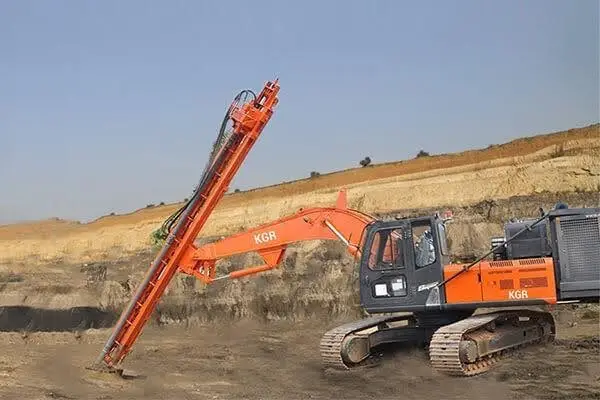
Water is among the most important natural resources of India, but India has been struggling with chronic water shortage in most of its regions. High rate of urbanisation, sporadic rainfall and excessive reliance on the surface water resources have shifted added pressure on the ground water resources. To address this, the modern borehole drilling rigs have come out to be a game-changing technology, with extraction of water becoming faster, more efficient and sustainable. These machines have changed the way in which Indians (both rural and urban) are accessing underground water, which serves industry, rural and urban agriculture, and even households.
WHAT ARE BOREHOLE DRILLING RIGS?
Borehole drilling rigs refer to specialised machines that are used to drill deep underground to reach the underground water reservoirs which are also referred to as aquifers. They bore shallow, deep wells known as boreholes with a depth of between 50 and more than 300 metres depending on the geology and the water table levels.
The high-tech rigs feature hydraulic system, rotary drilling heads, and high power compressors that allow them to go through solid rock stratum, making them usable in various terrains within the country - arid deserts and hilly areas. Compared to the traditional methods of manual drilling that was very slow and inaccurate, the modern rigs are able to bore a well within hours.
TECHNOLOGICAL ADVANCEMENTS DRIVING CHANGE
The technology of drilling boreholes in India has changed significantly over the years. A few breakthroughs have made the performance and sustainability more effective:
- Hydraulic and Pneumatic Systems: These systems provide greater drilling force and precision, allowing rigs to reach deeper aquifers while minimising wastage of energy and water during drilling.
- Automated and Digital Controls: The more complex rigs have digital monitoring devices to monitor the depth of drilling, pressure, and soil composition in a real time basis. This will assist the operators in locating the best water-bearing strata in a more precise way.
- Portable and Truck-Mounted Rigs: One of the significant breakthroughs has been mobility. The truck-mounted and trailer-mounted rigs can be easily transported to remote locations to save transportation and installation time.
- Energy saving and Environmentally friendly Designs: The rising cost of fuel and environmental concerns are ensuring that manufacturers are considering the rigs with electric motors, hybrid fit or with solar assisted technology that can help reduce the carbon emission and lower operating expenses.
TRANSFORMING RURAL WATER ACCESS
In the rural India where agriculture is the main source of livelihood, access to groundwater is critical. The drilling rigs of boreholes have enabled farmers and the rural population to get reliable source of water even in drought prone areas.
- Quicker installation: It can be installed in hours, where days were previously necessary due to either manual excavation or percussion drilling.
- Greater Depth: Rigs have the ability to reach greater depths of aquifers that will not be affected by conventional techniques, which supplies water in dry spells.
- Less Labour Dependence: Mechanised drilling will reduce the labour required in the drill and will reduce expenses and risks related to the manual drilling.
This has more specifically changed the course of things in states such as Maharashtra, Rajasthan and Telangana where frequent occurrences of drought have rendered surface water unreliable.
IMPACT ON URBAN AND INDUSTRIAL WATER NEEDS
The increase in water demand is as a result of urban sprawl and industrialisation. Lots of industries such as textiles, pharmaceuticals, construction among others, use borewell water extensively. Borehole drilling rigs are a cost effective and efficient method of sourcing water straight off of the underground aquifers.
In cities, drilling rigs are instrumental in:
- Borewell installation of residential complexes and commercial buildings.
- Carrying out geotechnical and hydrogeological investigations to determine the water potential.
- Encouraging use of rain water collectors by including borehole recharge project to restore the ground water level.
Cities and water companies are also adopting hi-tech rigs to drill boreholes which they are using as a method of recharging their water supplies, a sustainable method to curb water deficits in cities.
ECONOMIC AND ENVIRONMENTAL ADVANTAGES
The growing adoption of borehole drilling rigs brings significant economic and ecological benefits:
- Cost Efficiency: The modern rigs will use less manpower, be faster, and more accurate, but initially, it might appear that the costs are high, but in the long-term, it will be economical.
- Water Security: The deep boreholes are able to obtain cleaner and less-contaminated water sources, which are a safe source of drinking water and irrigation.
- Sustainability: Once it is accompanied by adequate water monitoring and recharge mechanisms, drilling of the boreholes aids in maintaining sustainable water, and over-drilling is avoided.
- Employment Generation: Because of the use of many drilling rigs, there are new jobs in terms of skilled operators, mechanics, and service technicians which is part of rural and semi-urban jobs.
CHALLENGES AND THE ROAD AHEAD
Despite the benefits, certain challenges persist:
- The issue of over-extracting groundwater is also a very grave issue especially in those areas that lack adequate monitoring.
- The costs of equipment and maintenance are high, and this may restrict access by small farmers.
- Insufficient control in the drilling of borewells usually causes imbalanced distribution of water and even the depletion of aquifers.
To overcome these problems, specialists focus on the necessity of the integrated water management policy that is incorporating the use of modern drilling in conjunction with groundwater recharge, real-time monitoring, and awareness throughout the population.
CONCLUSION
The use of borehole drilling rigs has brought a real revolution in the process of extracting and managing the ground water in India. These machines have become a pillar in the process of India seeking water security through the empowerment of farmers to urban infrastructure and industries. The technology, however, should be invested with a responsible usage, regulation, and investment on recharge systems in order to be sustainable in the long run.
Related Link: Choosing The Right DTH Hammer & Bits For Your Drilling Project